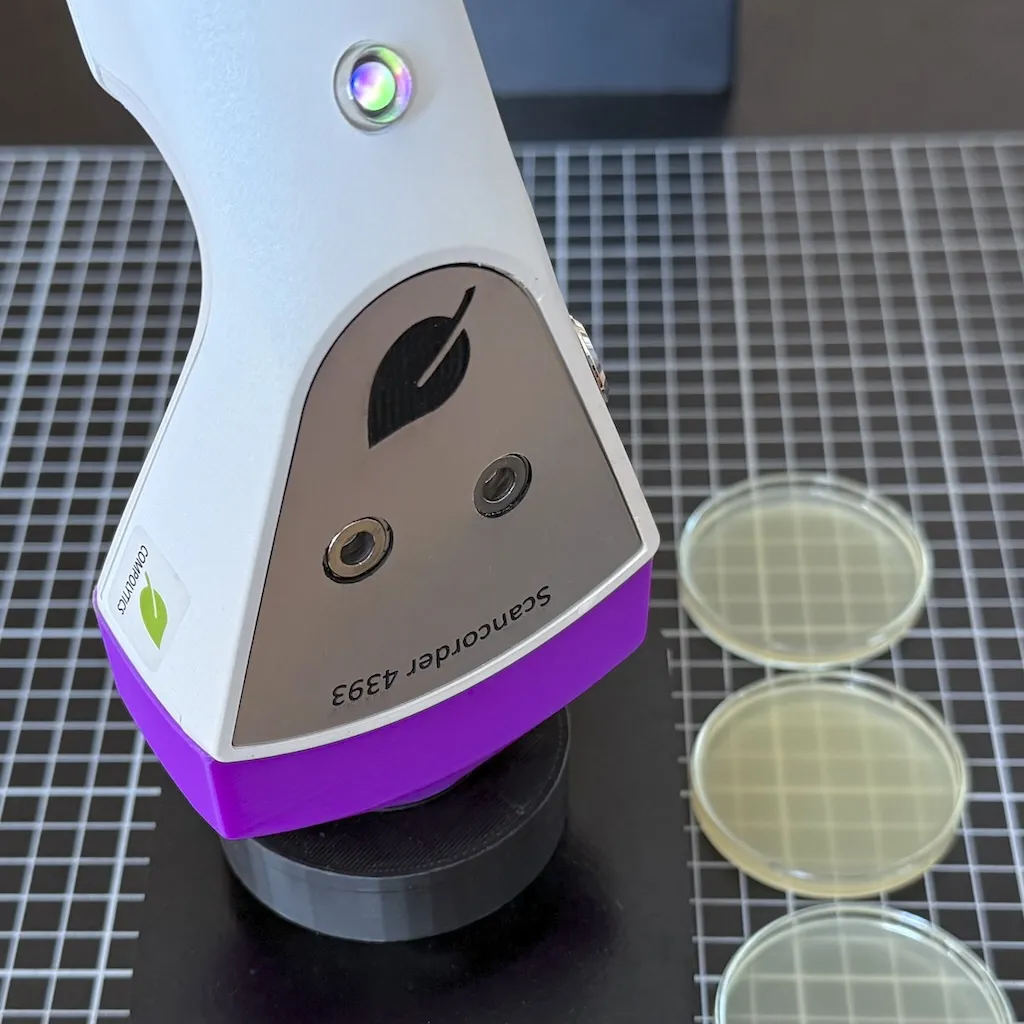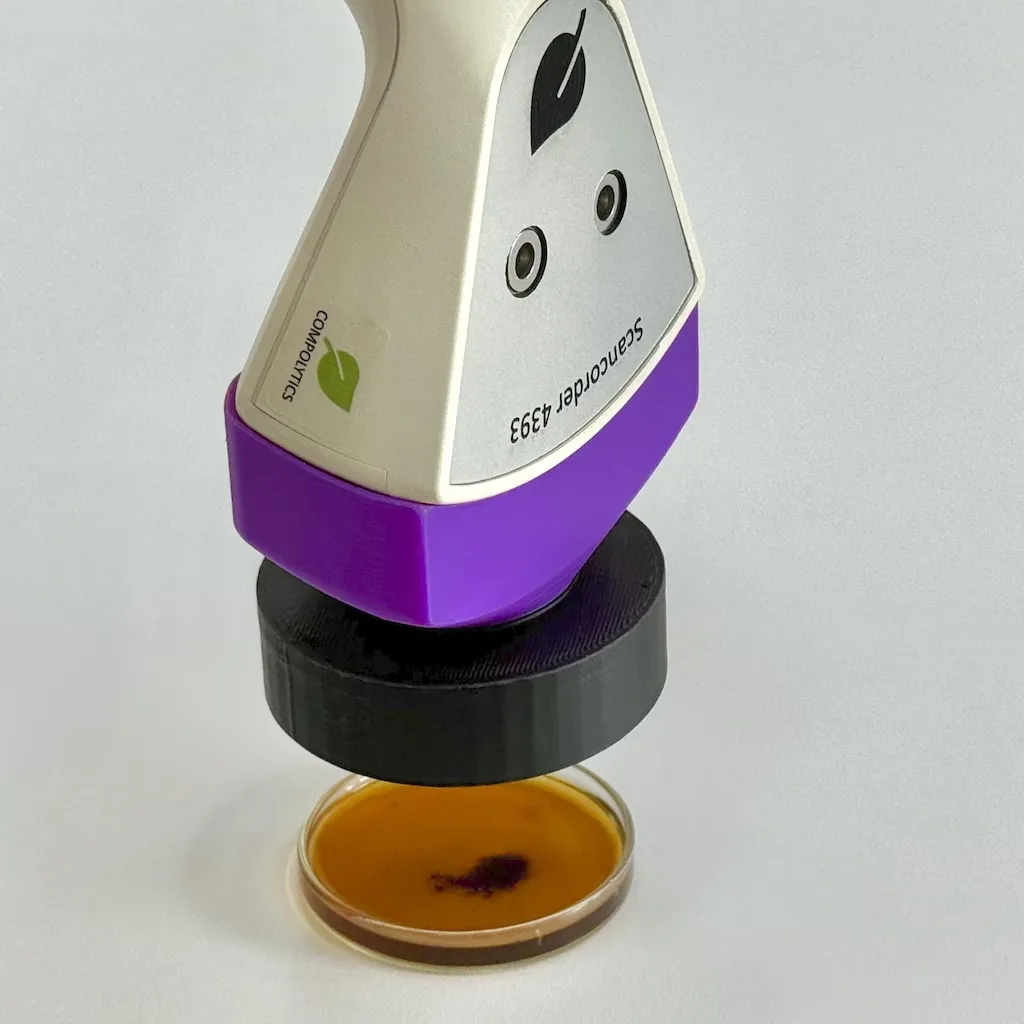


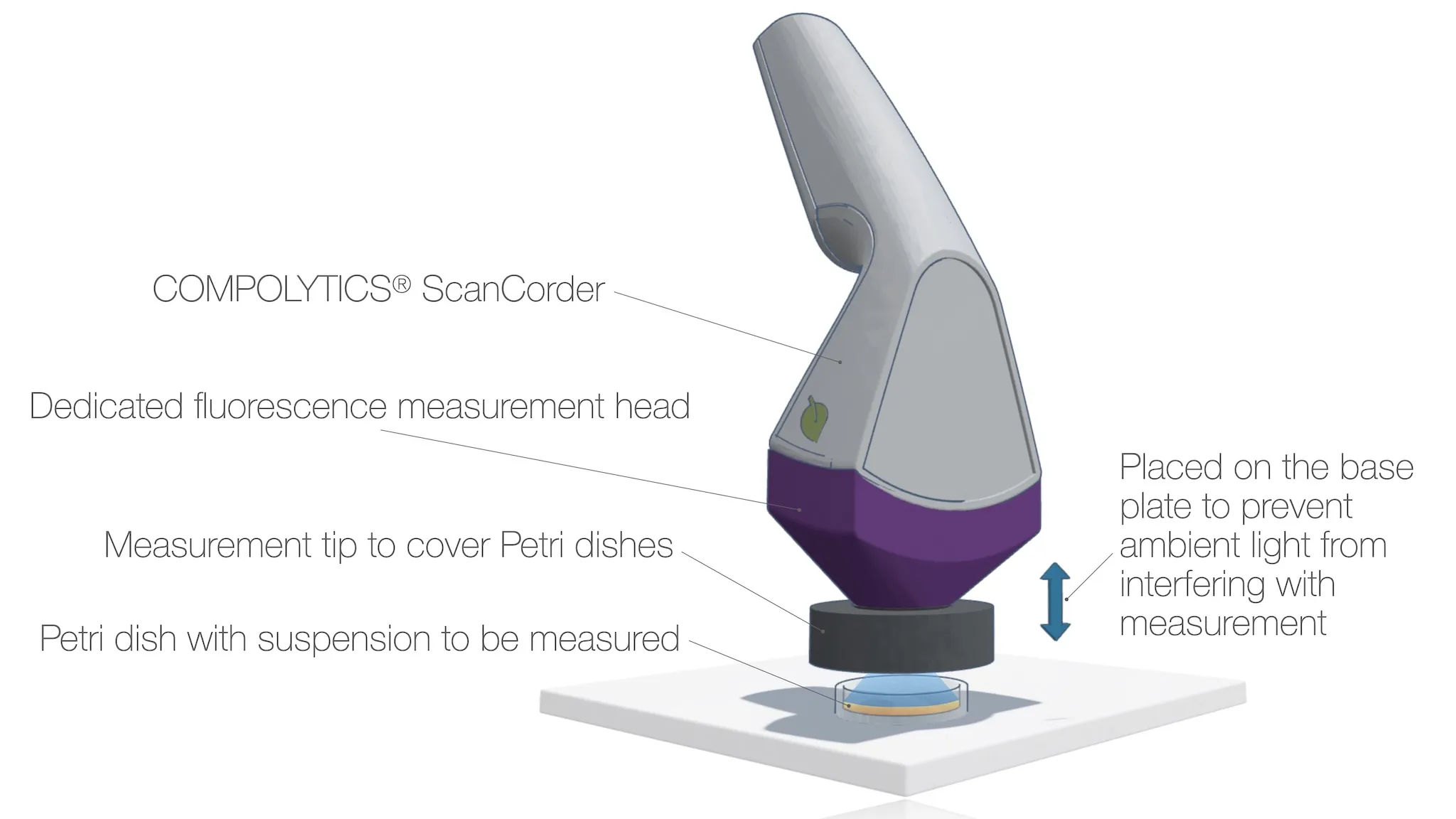
The COMPOLYTICS® ScanCorder platform has traditionally been developed for reflectance measurements. It is now being extended to another powerful optical modality: fluorescence. The key is the ScanCorder principle of inverted spectroscopy. Instead of illuminating a sample with broadband light, individual wavelengths are applied sequentially. For fluorescence measurements, these wavelengths can serve directly as excitation bands, while several detection bands can capture the resulting emission. This provides a compact and flexible architecture in which excitation and detection wavelengths can be tailored to a specific application.
The first productive fluorescence ScanCorder has now been built with an application-specific set of excitation and detection bands. It has already been used in an initial measurement campaign where bacteria and protein samples were investigated under controlled laboratory conditions. The campaign forms part of ongoing work on a multimodal optical sensor for chronic wound assessment, combining fluorescence and reflectance measurements, among other modalities, in a single handheld device.
This marks an important step from a technological extension of the ScanCorder concept to a working application-specific sensor and opens up new possibilities wherever fluorescence can provide complementary information to reflectance.